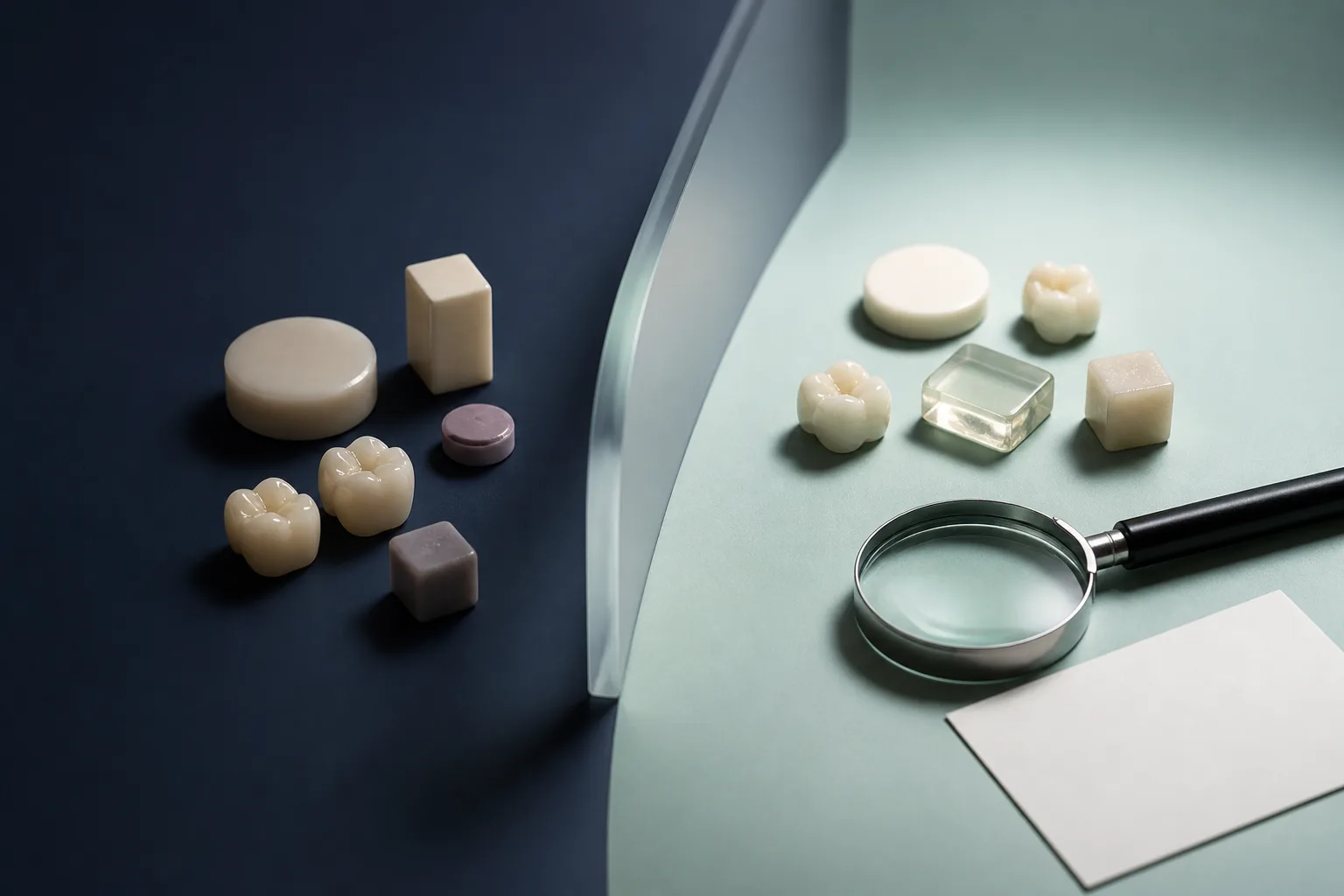
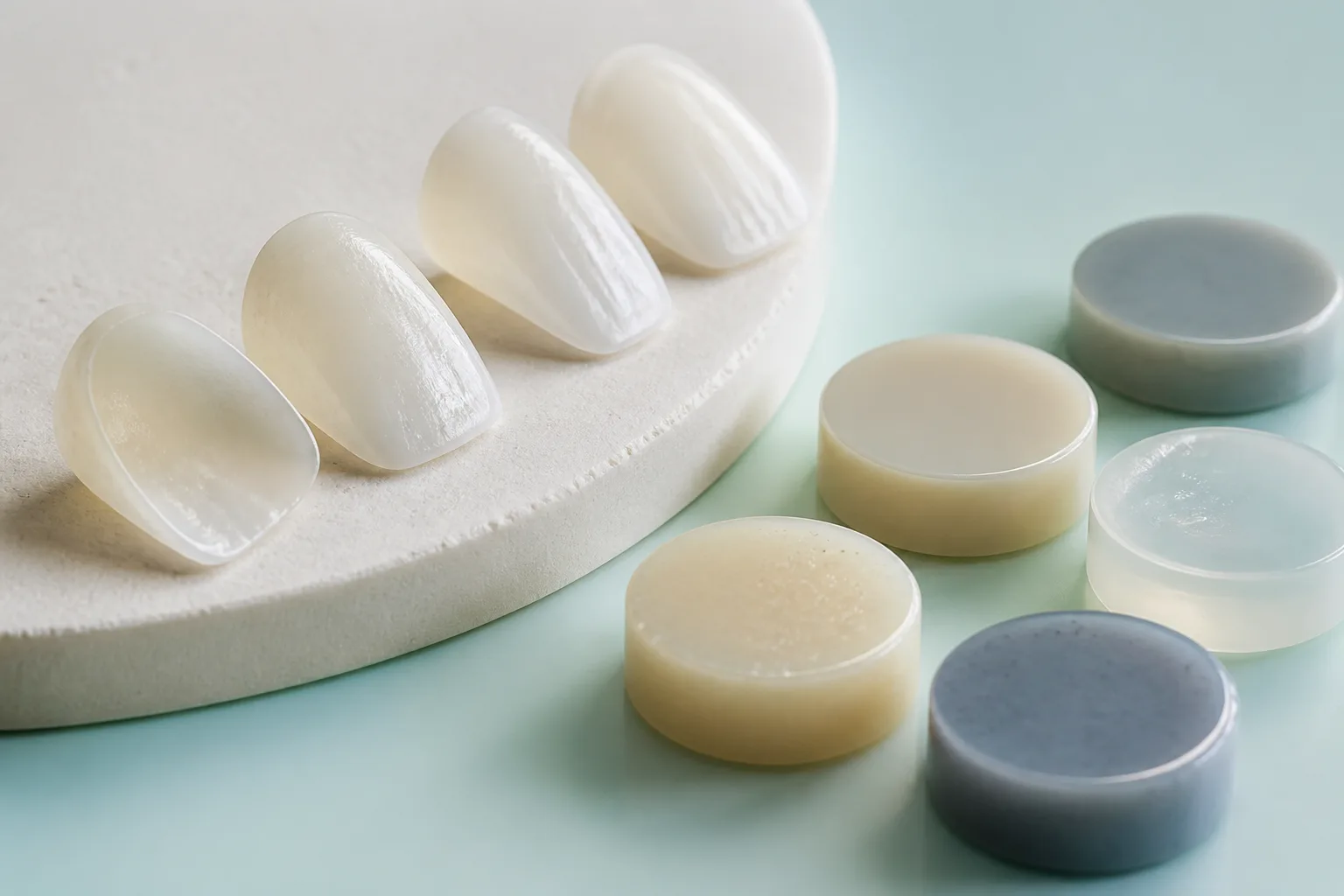
A neutral comparison framework for material conversations without declaring a universal winner.
Why material names are only the beginning
Porcelain and composite are broad categories, not complete plans. The technique, thickness, tooth condition, laboratory or chairside process, repair approach, and professional judgment can shape the discussion.
Appearance and light
Materials can interact with light, surface texture, and underlying color differently. Instead of assuming one appearance is “best,” ask how the proposed material, thickness, finish, and neighboring teeth affect the intended result.
Process and reversibility
People often want to compare the number of stages, whether work is done directly or involves a laboratory, and how much tooth preparation may be discussed. Those details are case-specific and should be explained for the actual proposal.
Repair, replacement, and maintenance
Ask what happens if an edge chips, a surface changes, or a restoration eventually needs attention. Repairability and replacement are not abstract advantages; they should be considered in the context of the exact material and situation.
Use a question table
For each option, note: the goal, preparation, expected maintenance, repair pathway, alternatives, important uncertainties, and what personal factors influence the recommendation.
Use this guide to prepare questions, then discuss your own health and options with a qualified dental professional.